

There’s a moment on the drive into Sangla Valley when the road curves and the gorge opens up — and you genuinely have to stop the car. Not because traffic demands it, but because the view does. The Baspa River runs cold and turquoise below, apple orchards climb the hillsides in messy, gorgeous rows, and beyond them, snow-capped peaks rise so sharply they look almost unreal. This is Kinnaur at its finest, and most travellers in India still haven’t discovered it.
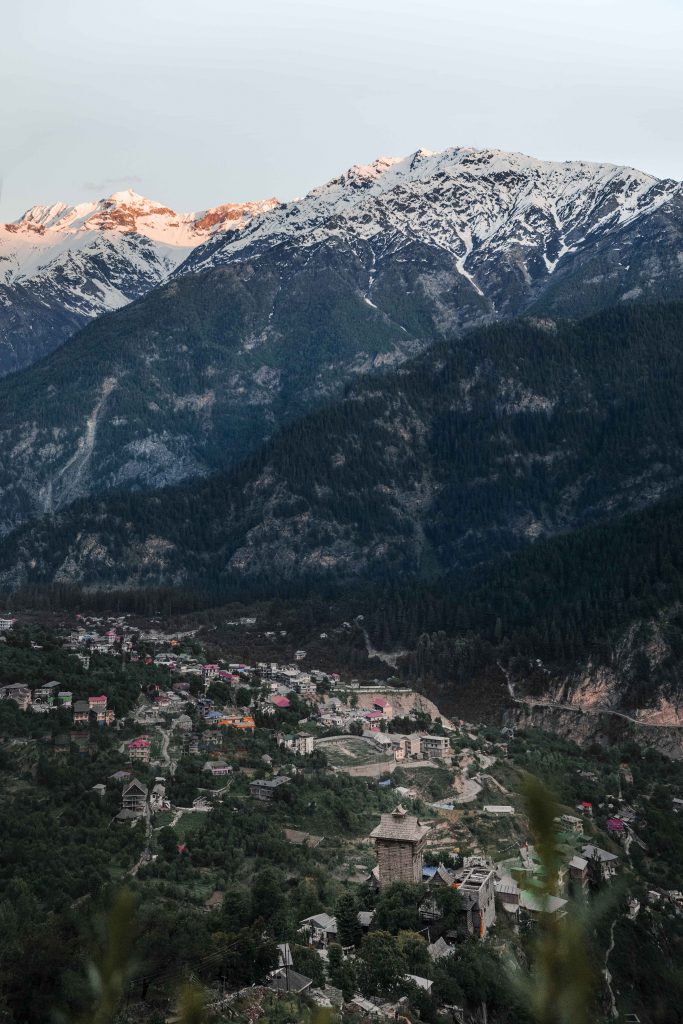
Sangla Valley sits at around 2,670 metres in the Kinnaur district of Himachal Pradesh, tucked along the course of the Baspa River before it meets the Sutlej. It’s a place of incredible contrasts — ancient fort temples and modern campsites, Buddhist prayer flags and Hindu shrines, orchard villages and glacial wilderness. If you’ve been to Manali and Spiti and want something that feels less discovered, this is where you go next.
This guide covers everything you actually need to know: how to get here, what to do, where to eat, what to pack, and the best time to visit — written by people who live and breathe this valley every single season.
How to Reach Sangla Valley
Sangla Valley is about 230 kilometres from Shimla — a distance that takes 7 to 8 hours thanks to mountain roads, but every kilometre of the drive is worth it.
From Delhi (550 km), the standard route is Delhi → Shimla → Rampur → Jeori → Karcham → Sangla. Most travellers take an overnight Volvo bus to Shimla, stay a night, and drive the remaining stretch the next morning when roads are clear and light is best. Alternatively, overnight buses from Delhi directly to Reckong Peo (the Kinnaur district capital) drop you 20 km from Sangla.
If you’re driving, the NH5 from Shimla through Kinnaur is spectacular — it passes through the Sutlej gorge, through the town of Rampur, and then climbs toward Karcham where the Baspa meets the Sutlej. From Karcham, it’s a 17 km ascent into Sangla Valley itself.
💡 The road from Karcham to Sangla is narrow and winding. Drive before noon if possible — afternoon brings more traffic and occasional rockfall in monsoon season.
The nearest airport is Shimla (Jubbarhatti), though flights are limited and weather-dependent. Most travellers fly into Delhi or Chandigarh and road trip from there — frankly, the drive is part of the experience.
Best Time to Visit Sangla Valley
Sangla Valley is a genuinely all-season destination, with each period offering something completely different.
May and June bring blossoming apple orchards and wildflowers, clear skies, and pleasantly warm days (12–22°C). This is peak trekking season — the passes open up and trails dry out. It’s also the most popular period, so book accommodation early.
July and August is monsoon season. The valley turns an extraordinary shade of green, waterfalls appear everywhere, and the landscape feels almost subtropical in patches. Some roads can close after heavy rain, so build flexibility into your itinerary. Rainfall is lighter here than in the western Himalayas, making it more accessible than Manali during the rains.
September and October is arguably the finest time to visit. The monsoon clears, skies turn crystalline blue, and the apple harvest begins — you can buy freshly picked apples directly from farmers for almost nothing. Temperatures drop to 5–15°C and evenings are crisp.
November to March is winter. Snowfall arrives in December and the valley can be cut off entirely by January. A handful of properties stay open for snow lovers, and if you can get in, you’ll have the entire valley to yourself.
💡 The sweet spot is mid-September to mid-October: post-monsoon clarity, apple season, and golden light all at once.
Things to Do in Sangla Valley
The valley rewards slow travellers more than those trying to tick boxes. Here’s what’s genuinely worth your time:
Chitkul — India’s Last Village
Chitkul sits at 3,450 metres and is the last inhabited village before the Indo-Tibet border. It’s 26 km from Sangla and absolutely worth the drive. The village has a handful of old wooden houses, a tiny temple, a gushing stream, and views of the Baspa glacier that will stop you mid-sentence. Go early, before afternoon clouds roll in.
Kamru Fort
The ancient Kamru Fort sits above Kamru village, just 2 km from Sangla town. It’s a beautifully preserved wooden structure with Kinner Kailash — the sacred peak — visible on clear days from the upper levels. Entry requires removing leather items (a local tradition). The walk up takes about 15 minutes and the views over the valley are excellent.
Rupin Pass Trek
Sangla is one of the trailheads for the legendary Rupin Pass trek — a 6-day route through alpine meadows, snow bridges, and one of the most dramatic pass crossings in the Indian Himalayas. Best tackled May through June, or again in September. Hire a local guide rather than going alone; the terrain demands respect.
Apple Orchard Walks & Local Life
Don’t rush through the valley — wander into the orchards, accept a cup of chai from a farmer, sit by the river. Sangla’s apples (and the lesser-known stone fruits — apricots, plums, cherries) are extraordinary. Village life here follows ancient rhythms and local people are warm and genuinely welcoming to curious travellers.
What to Pack for Sangla Valley
The altitude and mountain climate mean you need to pack thoughtfully regardless of the season.
- Warm layers even in summer — evenings drop sharply after sunset
- A good rain jacket (essential May through September)
- Sturdy walking shoes — trails are rocky and uneven
- Sunscreen SPF 50+ and sunglasses — UV intensity at altitude is underestimated
- Offline maps downloaded (Google Maps or Maps.me) — mobile signal is patchy
- Cash — ATMs exist in Sangla town but can run dry on busy weekends
- Basic medicine: altitude headache tablets, rehydration salts, blister plasters
💡 Don’t arrive from sea level and immediately attempt the Rupin Pass trek. Spend at least two nights at Sangla’s altitude (2,670m) to acclimatise properly.
Local Food & Where to Eat
Sangla has a small but charming food scene centred around Kinnauri cuisine and the handful of dhabas and resort restaurants along the main road.
Look out for Sidu — a traditional Kinnauri steamed bread made with wheat flour and served with ghee or lentil soup. Thukpa (noodle soup with vegetables or meat) is warming and ubiquitous. Rajma chawal, made with the famously good Kinnauri kidney beans, is served in almost every local dhaba and is excellent.
For fruit lovers: buy directly from orchards or the small market stalls. September apples from Sangla and Chitkul are genuinely among the finest you’ll eat anywhere in India — crisp, sweet, and nothing like the cold-storage varieties in city supermarkets.
💡 Many resorts and camps offer a dining experience using local produce. If you’re staying at a quality property, eating in is often better than venturing out — especially for dinner when mountain temperatures plummet.
Getting Around & Practical Tips
Sangla town is small and walkable. For Chitkul, Rakcham, and other villages, you’ll need either a private cab (easily arranged through your accommodation), or to flag down the occasional shared jeep that runs the valley road.
Inner Line Permit: Indian nationals do not require a permit to visit Sangla or Chitkul. Foreign nationals need an Inner Line Permit (available in Recong Peo or online). Keep a copy on your phone.
Mobile signal is available from BSNL and Airtel on the valley floor. It disappears on higher trails. Download your navigation and accommodation details offline before leaving Shimla or Rampur.
💡 Let your accommodation know your arrival time. If you’re arriving late or the road conditions change, you’ll want a contact who knows the valley’s terrain.
Where to Stay in Sangla Valley
Sangla has options ranging from basic guesthouses in the village to luxury tented camps beside the river. If you want to experience the valley rather than just sleep in it, the difference between a well-chosen stay and a mediocre one is enormous. Kamru Riverside Camps & Resorts sits right beside the Baspa River, with the sound of the water as your alarm clock and the peaks as your morning view — it’s been our base for Rupin Pass treks, Chitkul day trips, and countless stargazing nights. Wherever you choose to stay, the valley will do the rest.

